
How to Visit & Pray at Shrines and Temples in Japan: Step-by-Step Etiquette Guide⛩️🔔

Visiting historic shrines and temples is easily one of the most memorable parts of travelling in Japan. From the iconic red gates of Fushimi Inari in Kyoto to quiet neighbourhood shrines hidden down Tokyo backstreets, these spots offer a fascinating glimpse into Japanese culture.
If you are visiting for the first time, you might wonder: How do I enter properly? How do I purify my hands? How do I pray without making a mistake?
Don't worry! Japanese locals do not expect international travellers to memorise every traditional ritual. What matters most is approaching these sacred spaces with care, quiet respect, and consideration.
Here is a simple, step-by-step guide to navigating shrines and temples with complete confidence!

1. Essential Etiquette: Entrance, Purification & Praying
Whether you are visiting a Shinto shrine or a Buddhist temple, the core steps for entering, purifying, and offering a prayer follow a very similar, straightforward routine.
Step 1: Entrance Manners
When you arrive at the entrance gate, pause for a brief moment before stepping inside.
Bow slightly at the entrance: Give a short, respectful bow before walking through the Torii gate (shrine) or Sanmon gate (temple).
Walk along the side: At Shinto shrines, the exact centre of the main path (sando) is considered the pathway for spirits (kami), so it is polite to walk along the left or right side.
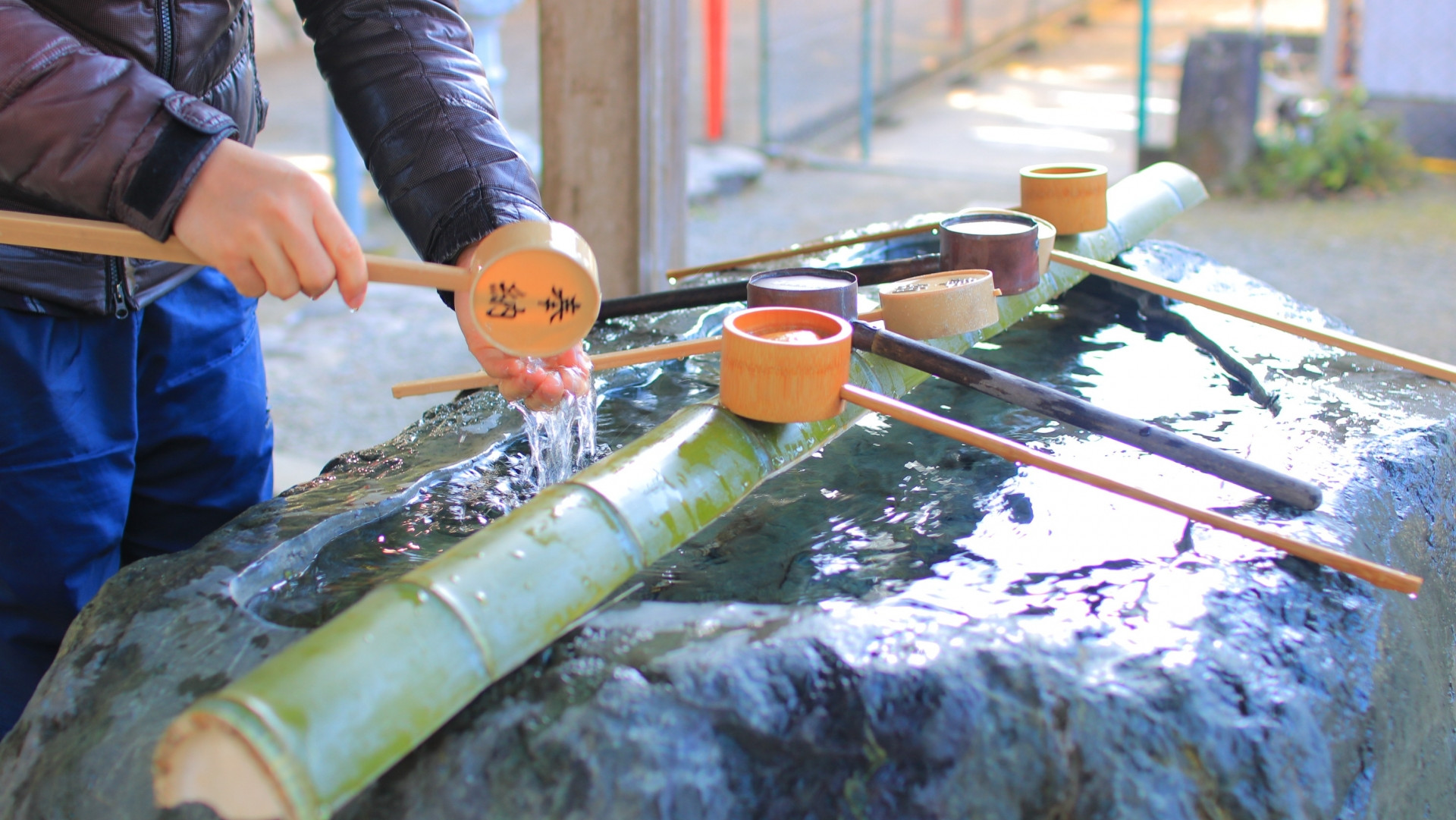
Step 2: Rinse Hands at the Water Basin (手水舎 - Temizuya)
Near the entrance, you will find a stone water basin. This quick ritual purifies your hands and mouth before approaching the main altar:
Pick up the wooden ladle with your right hand and scoop water.
Pour a little water over your left hand.
Switch hands and wash your right hand.
Pour a little water into your cupped left hand to gently rinse your mouth (spit quietly into the drain beside the basin, never back into the water pool!).
Tilt the ladle vertically so the remaining water washes down the handle for the next person.
Step 3: How to Pray (The One Big Difference!)
Once you reach the main hall (haiden or hondo), step up to the wooden coin box (saisen-bako).
Offer a coin: Drop a small coin gently into the box. A 5-yen coin (五円 - go-en) is considered luckiest because "go-en" sounds identical to the Japanese word for good luck and meaningful connections!
Ring the bell: If there is a hanging rope and bell, give it a firm, gentle shake once or twice to greet the spirits.
Now, follow the rule for where you are standing:
⛩️ At a Shinto Shrine: 2 Bows ➔ 2 Claps ➔ Silent Prayer ➔ 1 Bow Stand straight and bow deeply twice (roughly 90 degrees). Bring your hands together in front of your chest, slide your right hand down slightly, and clap twice. Offer a silent prayer, then make one final bow.
🛕 At a Buddhist Temple: Offer Coin ➔ Silent Prayer (Gassho) ➔ 1 Bow (NO CLAPPING!) Bring your hands together in front of your chest in a silent prayer stance (合掌 - Gassho). Keep your hands still and pray quietly. Drop your hands and make a gentle bow. Never clap at a temple!
Watch the Full Routine in Action! Want to see how the purification and praying steps look in real life? 👇Watch this quick video guide before your trip:
2. Spot the Difference: Shrine vs. Temple at a Glance
Now that you know the general flow, here is a handy side-by-side comparison chart showing the key differences and features between Shinto Shrines and Buddhist Temples.
Quick Comparison Chart
Feature | ⛩️ Shinto Shrine (神社 - Jinja) | 🛕 Buddhist Temple (お寺 - Otera) |
Religion & Origin | Shinto (Indigenous Japanese belief, nature spirits / kami) | Buddhism (Arrived in Japan from Asia in the 6th century) |
Entrance Gate | Torii Gate (Often bright red/vermilion or wooden) | Sanmon Gate (Large wooden multi-story entrance gate) |
Who Presides | Kannushi (Shinto Priests) & Miko (Shrine Maidens) | Obo-san (Buddhist Monks / Priests) |
Main Praying Rule | Clap twice! (2 bows, 2 claps, 1 bow) | DO NOT clap! (Silent prayer in Gassho stance) |
Key Symbols | Shimenawa (Straw ropes), Komainu (Lion-dogs) | Incense burners (Jokoro), Pagodas, Buddha statues |
3. Fun Traditions: Omikuji Fortunes & Goshuin Stamps
Beyond praying, both shrines and temples offer wonderful cultural keepsakes you can collect during your visits:
Paper Fortunes (おみくじ - Omikuji): For around 100 to 200 yen, you can draw a fortune slip telling your luck for love, health, travel, and studies! If you get a bad fortune, simply tie the paper to the designated metal racks or trees on-site so the bad luck stays behind.
Wooden Wish Plaques (絵馬 - Ema): Write a wish or goal on a small wooden plaque and hang it up among hundreds of others.
Temple & Shrine Stamps (御朱印 - Goshuin): Many travellers carry a special blank notebook (Goshuin-cho) to receive hand-drawn calligraphic ink stamps from monks or shrine staff as a meaningful diary of their trip!

💡 Shrine & Temple Vocabulary Box
Here are a few handy Japanese words to remember during your exploration:
神社 (じんじゃ - jinja): Shinto shrine
お寺 (おてら - otera): Buddhist temple
鳥居 (とりい - torii): Shrine entry gate
手水舎 (てみずや - temizuya): Water purification basin
お賽銭 (おさいせん - osaisen): Coin offering
二礼二拍手一礼 (にれい にはくしゅ いちれい - ni-rei, ni-hakushu, ichi-rei): 2 bows, 2 claps, 1 bow (shrine rule!)
おみくじ (omikuji): Paper fortune slip
御朱印 (ごしゅいん - goshuin): Commemorative shrine/temple calligraphic stamp
🚀 Travel Japan with Confidence & Cultural Nuance!
Knowing how to bow at a gate, cleanse your hands, or pray respectfully turns a basic sightseeing stop into a memorable cultural experience. When you show respect for local customs, you will feel so much more connected to the heart of Japan.
At Nihongo Journey, our 1-on-1 online lessons give you the practical conversation skills, travel phrases, and real-life cultural context you need to explore every corner of Japan with ease.

Have a peaceful, unforgettable time exploring Japan's stunning shrines and temples! 🌸


Comments