
School Life in Japan: How the Japanese School System Compares to Australia 🏫🎒

Updated: Aug 6
Have you ever watched an anime or Japanese drama and wondered if real school life in Japan is actually like that? Or perhaps you—or your child—are preparing for an upcoming school exchange trip to Japan and feeling a mix of excitement and nerves.

While both Australia and Japan offer excellent education, the way schools are structured, how the calendar is run, and even how students count their grades are surprisingly different.
Here is a simple, practical guide comparing the two systems so you know exactly what to expect.
Quick Navigation 🔍
Want to jump straight to a specific section? Click any link below to navigate:
Part 1: The 6-3-3 Structure & Counting Grades
Unlike Australia's continuous journey from Prep/Reception to Year 12, Japan divides school into three distinct stages. Every time a student enters a new school level, their grade level resets to "1st Year."
Here is how the 6-3-3 system breaks down:
小学校 (Shōgakkō - Elementary School): 6 years (Ages 6–12) ➔ Years 1 to 6
中学校 (Chūgakkō - Junior High School): 3 years (Ages 12–15) ➔ Years 1 to 3
高校 (Kōkō - Senior High School): 3 years (Ages 15–18) ➔ Years 1 to 3
To see how these grades match up side-by-side with Australian school years, take a look at this quick comparison chart:
Age | Australian School Year | Japanese School Level | Japanese Grade Name |
6 – 7 | Year 1 | Elementary 1st Year | 小学1年生 (Shōgaku ichi nensei) |
7 – 8 | Year 2 | Elementary 2nd Year | 小学2年生 (Shōgaku ni nensei) |
8 – 9 | Year 3 | Elementary 3rd Year | 小学3年生 (Shōgaku san nensei) |
9 – 10 | Year 4 | Elementary 4th Year | 小学4年生 (Shōgaku yo nensei) |
10 – 11 | Year 5 | Elementary 5th Year | 小学5年生 (Shōgaku go nensei) |
11 – 12 | Year 6 | Elementary 6th Year | 小学6年生 (Shōgaku roku nensei) |
12 – 13 | Year 7 | Junior High 1st Year | 中学1年生 (Chūgaku ichi nensei) |
13 – 14 | Year 8 | Junior High 2nd Year | 中学2年生 (Chūgaku ni nensei) |
14 – 15 | Year 9 | Junior High 3rd Year | 中学3年生 (Chūgaku san nensei) |
15 – 16 | Year 10 | High School 1st Year | 高校1年生 (Kōkō ichi nensei) |
16 – 17 | Year 11 | High School 2nd Year | 高校2年生 (Kōkō ni nensei) |
17 – 18 | Year 12 | High School 3rd Year | 高校3年生 (Kōkō san nensei) |
Two Key Differences to Remember:
Resetting the Clock: You will never hear a Japanese student say they are in "Year 11." They start back at "1st year" (一年生 - ichinen-sei) when they enter junior high, and again when they enter high school.
High School Entrance Exams: In Australia, moving from junior high to senior high is usually automatic. In Japan, students must sit entrance exams to get into Senior High School. Even though high school is technically not compulsory, over 98% of students choose to go.
Part 2: The School Calendar: Spring Starts vs. Summer Starts
The timing of the academic year is a major difference, shaped by different hemispheres and seasonal traditions.

The Australian Calendar:
Starts in: Late January or early February (after the long summer holidays).
Divided into: 4 Terms.
Finishes in: Mid-December (just in time for the hot summer break and Christmas).
The Japanese Calendar:
Starts in: Early April (the traditional start of both the business and school year).
Divided into: 3 Terms.
Finishes in: Mid-March.
The Magic of April: Starting school in April is highly significant in Japanese culture because it coincides with the blooming of the sakura (cherry blossoms). Cherry blossoms represent new beginnings and fresh starts. Walking to school on your very first day under a shower of pink petals is a core memory for almost every Japanese child.
Part 3: Uniforms, School Lunches & Daily Cleaning
While Australian schools focus heavily on practical daily routines, Japanese schools integrate personal responsibility and group teamwork directly into the daily schedule.
1. School Uniforms (制服 - Seifuku)
In Japan, school uniforms are a key part of student identity. If you visit a Japanese school, you will see a few classic styles:
Sailor Suits (セーラー服 - sērā-fuku): Traditional girls' uniforms featuring a sailor-style collar and ribbon.

Gakuran (学ラン): Classic boys' uniforms with a dark, high-collar jacket and gold buttons.
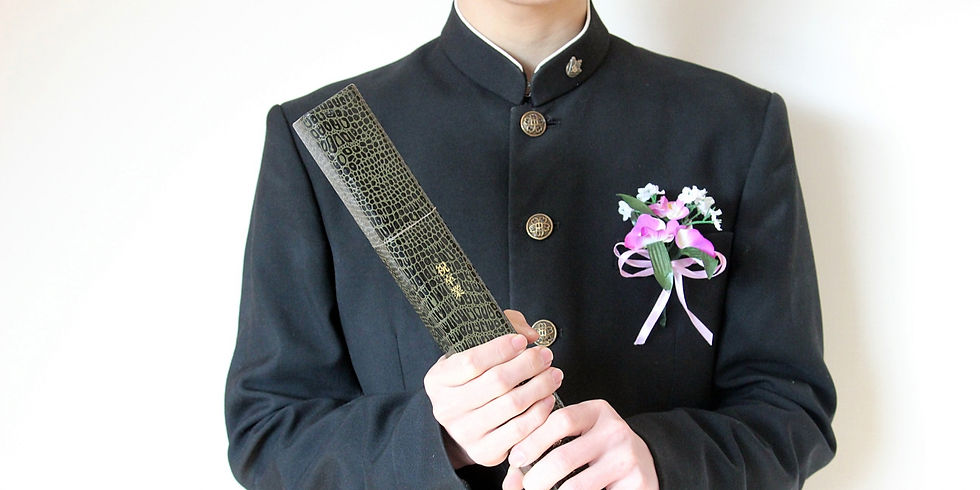
Blazers (ブレザー): Modern western-style blazers worn with a tie or ribbon, which have become very common in recent years.

Indoor Shoes (上履き - uwabaki): To keep classrooms clean, everyone—including visitors—must remove their outdoor shoes at the entrance (genkan) and change into lightweight indoor slippers.
2. School Lunch (給食 - Kyūshoku)
In Australia, students usually bring a packed lunchbox from home or buy food from the school canteen to eat outdoors.
In Japan, primary and junior high schools use a structured lunch system:
Made Fresh: Nutritious hot meals are cooked daily by on-site school chefs.
Served by Students: Instead of cafeteria staff, students take turns on "lunch duty" (給食当番 - kyūshoku tōban). They wear white smocks, hats, and masks to serve equal portions to their classmates.
Eating Together: Everyone eats together at their desks in the classroom with their teacher, practising gratitude and table manners.
3. Daily Cleaning (掃除 - Sōji)
Unlike Australian schools, where professional cleaners tidy up after hours, Japanese schools rarely employ janitors.
15 Minutes of Teamwork: Every day after lunch, students spend 15 minutes sweeping classrooms, wiping down blackboards, scrubbing floors, and cleaning the hallways together.
The Goal: This practice teaches self-reliance, respect for shared spaces, and the importance of working together to maintain group harmony (wa).
💡 School Life Vocabulary Box
Let’s learn some common Japanese words to help you talk about school life:
小学校 (しょうがっこう - shōgakkō): Elementary / Primary school
中学校 (ちゅうがっこう - chūgakkō): Junior high / Middle school
高校 (こうこう - kōkō): Senior high school
一年生 (いちねんせい - ichinen-sei): First-year student
制服 (せいふく - seifuku): School uniform
上履き (うわばき - uwabaki): Indoor school shoes
給食 (きゅうしょく - kyūshoku): School lunch
掃除 (そうじ - sōji): Cleaning
入学式 (にゅうがくしき - nyūgakushiki): School entrance ceremony (held in April!)
If you want to learn more about school life in Japan, check this website:
School life in Tokyo
Want to practice chatting about cultural differences in a relaxed, encouraging environment? At Nihongo Journey, we offer casual, personalised 1-on-1 online lessons tailored to your personal goals. We'll help you build the confidence to speak naturally!


Comments