
A Guide to Japanese Onomatopoeia (Part 1) 🎶Food & Feelings
- Mako
- May 11
- 2 min read
If you’ve ever listened closely to a conversation in Japanese, you might have noticed a lot of repetitive, catchy words like Waku-waku or Fuwa-fuwa.
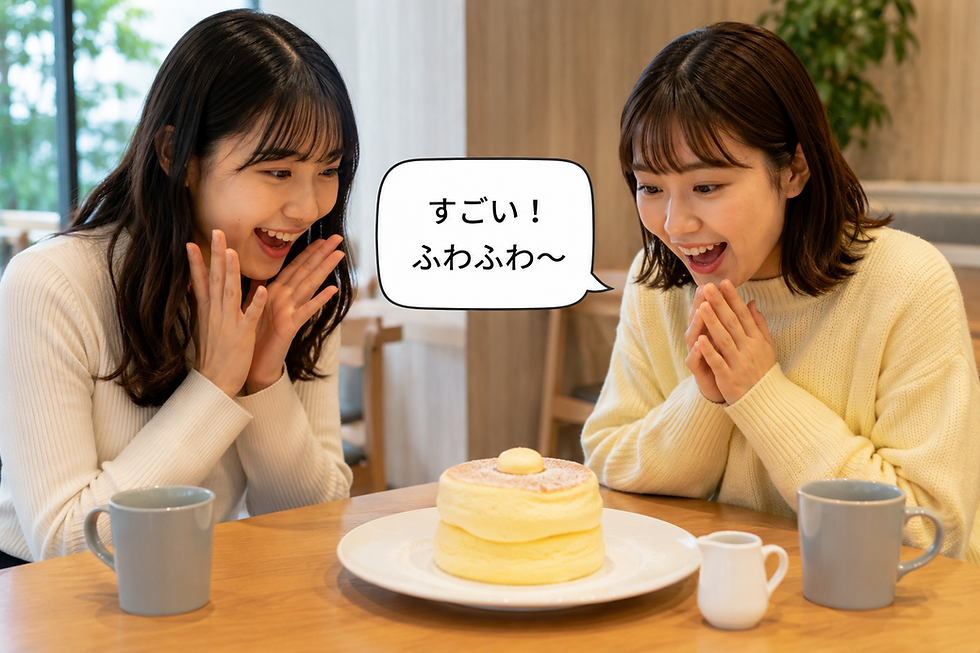
In English, you mostly use onomatopoeia for noises (like "bang" or "splash"). But in Japanese, these words—called Onomatopoeia—are a huge part of daily life. They describe feelings, textures, and even the way things move. They add a natural "flavour" to the language that you just can't get from standard adjectives.
In this first part of our guide, let’s look at some of the most essential onomatopoeia for Food and Feelings.
1. Food & Textures: How does it feel? ☁️
Japanese food culture is huge on 食感 "shokkan" (mouthfeel). Whether you're eating crispy tempura or sticky natto, these words help you describe exactly what's happening in your mouth.
Onomatopoeia | Meaning | Example Scenario |
ふわふわ (Fuwa-fuwa) | Soft, light, and airy. | A fluffy pancake or a puppy. |
もぐもぐ (Mogu-mogu) | Chewing a big mouthful. | A kid eating a delicious sandwich. |
ぱりぱり (Pari-pari) | Thin and crispy/crunchy. | Potato chips or fresh lettuce. |
さくさく (Saku-saku) | Light and flaky crunch. | Perfect tempura or a croissant. |
ねばねば (Neba-neba) | Sticky or stringy. | Natto or okra. |
あつあつ (Atsu-atsu) | Piping hot / Steaming. | Freshly served ramen or takoyaki. |
ぷるぷる (Puru-puru) | Jiggling or bouncy. | Jelly, pudding, or soft tofu. |
かりかり (Kari-kari) | Hard-crunchy or toasted. | Crispy bacon or well-done toast. |
2. Feelings & Emotions: How do you feel inside? ❤️
Instead of just saying "I'm nervous" or "I'm happy," these words describe the physical sensation or the "look" of the emotion.
Onomatopoeia | Meaning | Example Scenario |
わくわく (Waku-waku) | Bubbling excitement. | Waiting for a holiday to start. |
どきどき (Doki-doki) | Pounding heart. | A first date or a big speech. |
うきうき (Uki-uki) | Cheerful, "floating" joy. | Walking on air because you're happy. |
いらいら (Irai-ira) | Irritated or frustrated. | Being stuck in a slow traffic jam. |
びくびく (Biku-biku) | Timid or trembling with fear. | Scared of being scolded by your boss. |
きょろきょろ (Kyoro-kyoro) | Looking around restlessly. | Being lost in a busy station like Shinjuku. |
そわそわ (Sowa-sowa) | Fidgety or restless. | Waiting for important news to arrive. |
にこにこ (Niko-niko) | Smiling brightly. | A happy, friendly person in a cafe. |
Why should you learn these? 💡
Think of it this way: Saying "This bread is soft" is a fact. But saying "This bread is Fuwa-fuwa" paints a much clearer picture for the listener.
Learning these makes your Japanese sound more natural and helps you connect with native speakers on a deeper level. Plus, they’re just fun to say!
Your Turn! What's your favourite Fuwa-fuwa thing? Or is there a word here that describes how you're feeling today? Let us know in the comments!


Comments